
What to Do About Today?
The Workbench Dispatch: 017

Thank you for the amazing reception and feedback on the last newsletter. Sorry for the delay, it’s been a hectic few weeks, caught up in work and some other stuff as I’ll explain more below. This edition of the Dispatch, a (confirmed spoiler free) review of Ari Aster’s newest film Eddington, thoughts on it and other things’ attempted use of the prevailing aesthetics of our time, and wondering what the power of satire is in a hyper-world that is immensely more strange than fiction. Also, a new tee is on the way, so mark those calendars and manage those closets. It’s been a weird month for me for any number of reasons, a lot of feelings careening around that needed some exorcising, and I hope that some people can relate. Let me know how you feel. Recently, as more people have been approaching me in person to let me know they like the writing or they have thoughts on the ideas I’ve shared, it’s really reaffirmed why I get so much fulfillment out of continuing to do it. Writing allows me the type of vulnerability that I appreciate so much from musicians and other artists that I felt just wasn’t (or maybe even couldn’t be) provided from just product or commerce. It’s a direct sharing of ideas and thoughts and insecurities and anxieties that doesn’t have to be wrapped up in some type of pitch for something else, or to posture myself to be seen as something. I’m incredibly happy that it has let me relate or connect to other people in a way that I haven’t really been able to before through just social media. I hope that I can continue this and take it as far as I can, and I hope you’ll be down to come with. As usual, thank you for reading.
-ms
Table of Contents
What to Do About Today?: Eddington, Satire, and the Aesthetics of Modern Derangement
Recent Pieces/Mockups
“Depression’s Got a Hold of Me”
Refer my newsletter to some friends to unlock a few months for free and remove the paywalls on every edition, PLUS get access to the full archive!
⫘⫘⫘⫘⫘⫘⫘⫘⫘⫘⫘⫘⫘⫘⫘⫘⫘⫘⫘
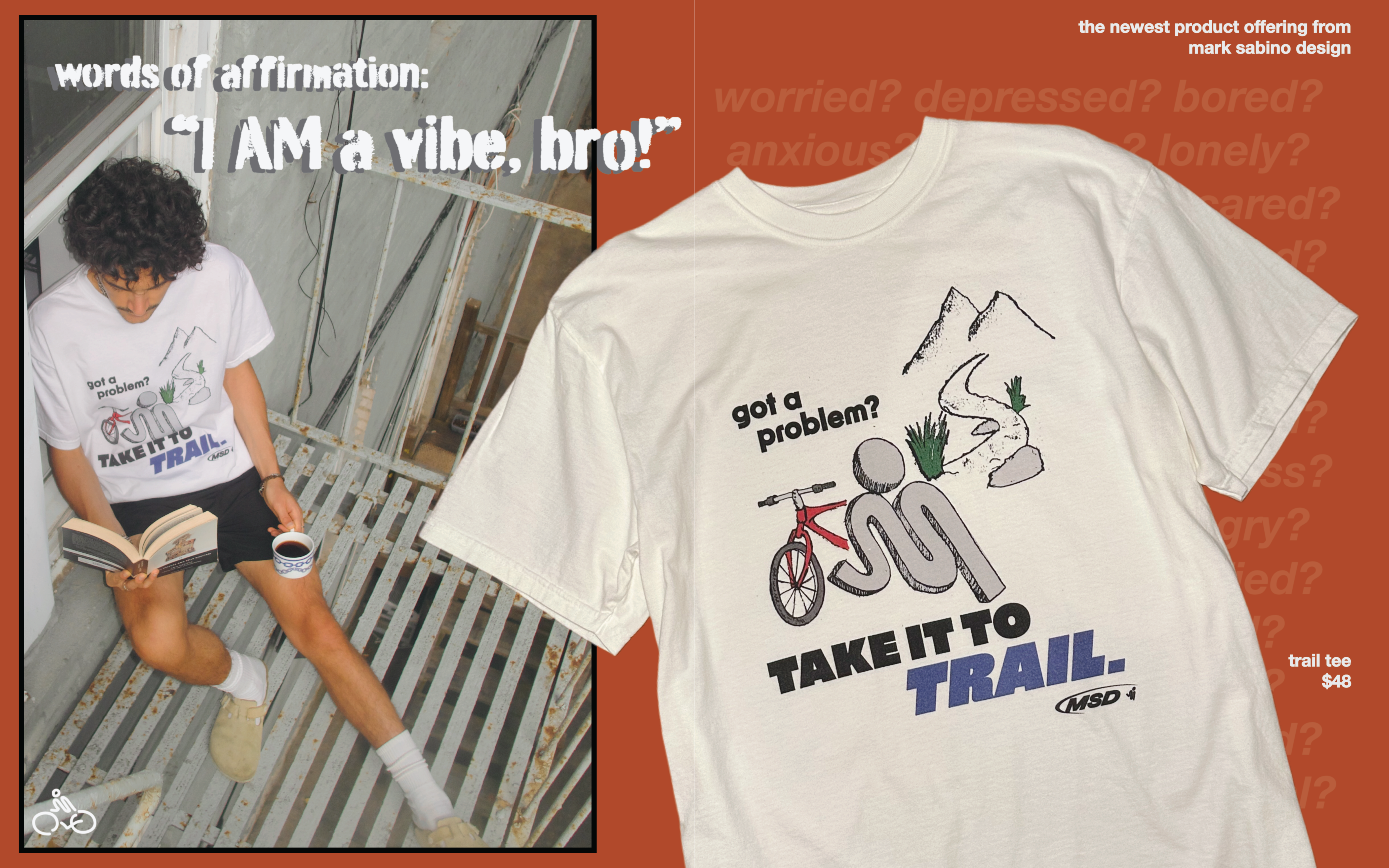
A Word From Our Sponsor
⫘⫘⫘⫘⫘⫘⫘⫘⫘⫘⫘⫘⫘⫘⫘⫘⫘⫘⫘
This past weekend, a friend and I ventured to the theater to check out the new Ari Aster (Hereditary, Midsommar) A24 production Eddington, starring Joaquin Phoenix, Pedro Pascal, and Emma Stone. In the few short days surrounding its release, many reviews were touting it as “polarizing”, “daring”, and a “biting social satire of the COVID era”. Many online impressions were praising its ability to make the neoliberal straw men of the world very angry and triggered, and considering Aster’s history with provocation and audience manipulation through his horror films, I was very interested in what it had to say about All This. Unfortunately however, for me at least, it wound up not saying much, or rather not much more than we’ve already heard (and still hear) every day for the last 5 years. NOTE: I’m going to try and keep this as spoiler free as possible, because really the thematics of the movie are more important to this essay than the specific plotlines, and really, the movie itself is only a small, representative part of what I’m talking about. Any acute plot spoilers (if any) will be marked with a big bold (SPOILER!!) if need be to let you know to skip ahead a little, but you probably won’t. That being said, let’s take a trip to New Mexico.
Eddington tells the story of sheriff Joe Cross (Phoenix) dealing in real time with all the “tentpole” events of 2020 (lockdowns, mask mandates, social unrest and protests following the murder of George Floyd) in the small titular New Mexico town led by Mayor Ted Garcia (Pascal) and the growing bitter antagonism between the two men, alongside several crisscrossing sub-plots involving protests, ANTIFA, and all the rest that eventually come to a head by the climax. It has all the details of the time, from debates over breathability in masks (and subsequent refusal to wear them), social distancing, virtue signaling, the black squares on IG, and so on. You’ve seen it all before, you’ve lived it all before. As the movie progresses, Joe’s tumultuous relationship with his unstable wife Louise (Stone) only worsens, especially as he spontaneously announces his campaign to run for mayor in order to “take back” his town from the “Deep State” policies of Garcia. Again, you’ve seen it all before, just open any social media app right now. That seems to be the root of my main issue with the film beyond whatever critiques I have about the plot or pacing (I will say though that both Phoenix and surprisingly Pascal do a great job in their respective roles, the movie is far and away much better acted than it is written), it’s the fact that what is being presented thematically, comedically, or supposedly with commentary is done so almost retrospectively in a way that would have you believe we were farther removed from its events than we actually are. Maybe intentionally, it wields a sense of hindsight that we as a country have not come anywhere close to earning yet. It feels like a film that could have (maybe should have) been made in 2035 instead of 2025. We are still just as entrenched in the same conspiracies, partisan tension, latent physical and mental illness, and all the rest as we were 5 years ago. I figured that was the point, that it was some type of (pretty weak) statement about how little things have changed in the last half decade, but by the film’s conclusion, that theory, while still arguable, began to feel like it didn’t even matter much.

What was more interesting to me than the movie itself was the audience’s reaction to it at the particular Brooklyn screening I was at. Peppered throughout the movie are a lot of “post-woke” jabs at the expense of the extremes of the right and left at the time of these events. Some landed for me as decently written satire (an early on screen gag shows a white tiktok influencer dancing while breaking down a James Baldwin book) while others hit me more as simply a presentation of what happened and more importantly what is still happening today. What surprised me though were how visceral some of the laughs in the theater were at scenes or lines that didn’t really feel like they were meant to be jokes, a sort of cathartic exhale after years of pretending to be socially conscious. “God, remember how exhausting it was when we were all so freaking WOKE and angry? Glad that’s all over now.” At one scene in particular involving a protest swirling with the same palpable rage and tension that we all experienced in real time 5 years ago, there were random bursts of laughter from the theater crowd that seemed to have assumed that the joke was that these people were protesting, and not from the actual gags that came a few minutes later. Was there a lot of angry derangement from nearly everyone at the time stemming from being cooped up in their homes for months? Sure. Is it inherently funny that non-black people were (at least at the moment) impassioned and protesting in favor of black people in a moment of (admittedly pretty confused) fervor? I mean, not that much. The crowd seemed to think so though. Did we solve the racism or the conspiratorial derangement or the splitting of the social seams or any of this in the last five years to warrant this type of retrospective patting of our own backs? Especially now, when more and more young people are trying to organize, or speak out in what ways they can, or protest against an ongoing horrifying genocide, is snark about that impassioned expression that is born from a shared feeling of helplessness really what we need right now? Faced with images and videos of incomprehensible brutality day in and day out, feeling absolutely futile in our efforts to do something, subjected to our complacency in the horrors of the world, should we really be concerned with picking apart the cringe? Even the spectre of COVID itself hasn’t left us, as much as we want it to be the case and literally and figuratively “toss our masks away”. This isn’t me trying to wokescold or virtue signal or anything like that either, it just made me sincerely confused what the point of what was being shown was, other than to provide a safe, detached filter of irony to coat the mirror that was clearly being raised to the viewers. Again, maybe that was “the point” of the movie, but what’s the point of making that point? That everyone’s dumb? You didn’t have to tell me that for nearly 2 and a half hours, I’m alive in America in 2025. The assertion that we’re trapped in this Long 2020 is an insightful one, one that I agree with, and one that is worth talking about. The issue however, is there was actually not much talking about it. If you want to indict the audience for some type of complicity in how wacky things are, then do it, don’t half ass it through limp-wristed gesturing and hide your hand. The people that should look into that allegedly critical mirror provided by the movie will not do that, or miss it entirely, and the people that recognize these complexities and hypocrisies for what they are already understand them enough to self reflect, so who is it meant for? Cynics on Twitter? I didn’t feel triggered by the movie as some online reviews would have led to me believe, but rather just bored by the flat commentary it was allegedly trying to provide. Yes, all of this was and is very outrageous and ridiculous and cringey and all the rest. Yes, big tech conglomerates are ripping into small towns with politicians in their pockets and under their thumbs, sacrificing humanity for efficiency and ruining the environment. Yes, everything is fried and unintelligible now. Should we all just kill ourselves? Should we resign to a life of vague scoffing, finger pointing, and vocal fry accented detachment from it all until the world burns up? Despite my somewhat monotone voice and intense demeanor and existential outlook on things sometimes, I’m not a nihilist. But this movie, especially by the ending, really felt like it wanted me to be.
A lot of the supposed “statements” of the movie seemed to have an ambiguity to them that felt more dodgy and incomplete than intentional. The central message felt like that of a weaker South Park episode wrapped in a social media tinged set dressing, a resounding stance of “isn’t this all soooo crazy?”. Well, yes, sure it is, but we also still see it every hour of every day now, so where do we go from there? Will pointing out all this hypocrisy, or contradiction, or absurdity, or stupidity from every side for the 200th time be the thing to finally wake us all up? Probably not. Doing not much beyond just mentioning or acknowledging these things, even in satire, doesn’t inspire nearly enough emotion or action any more than say, an average ironic content aggregator meme page or a Dan Hentschel bit does to move people's stances on anything even a little bit. I will give some credit to the film for its use of digital screens, which is something that I have been desperately wanting to see written more into movies now that we have become fluent in using them hand in hand with our communication, but even those at times felt like the same tired statements we’ve heard and experienced in real time before. Yes, we know people are constantly on their phones or texting or doomscrolling or recording other people, but what else is there to say? It felt more like an exercise in familiarity or recognizability rather than using those things to say anything noteworthy or truly thought provoking. Throughout the runtime I waited to be scandalized or shocked or riled up, but was only left unfortunately getting exactly what I expected with very few surprises. From the typical discourse points, to the usual jokes, to the shock-bait spurts of intense violence, even down to the now seemingly government mandated “ironic” use of an upbeat pop song. I didn’t feel much like pointing at the screen and saying “Hey I recognize that thing!” after the first 15 times. I kept thinking to myself “Sure, but what about it?” with every new reference or detail or presentation of the near past. What is it that’s demanding to be said from all of this? The film felt too preoccupied with juggling its supposed social commentary pastiche to focus on a coherent and interesting story utilizing those things. Acting as a reflection of our crazy present only goes so far when the average person with some minimum amount of critical thinking already understands how fucked up life is now. Simply parroting recognizable aesthetics or talking points or buzzwords isn’t funny or a commentary in itself, it has to do something with them, beyond just confirming that they in fact exist and they’re crazy, something we clearly all already know.


Though it doesn’t do much past showing it, the movie does boldly attempt to wield and satirize the now almost ubiquitous aesthetic of our modern time that I’ve just been calling schizo media. Call it brainrot content, call it slop, you know it and you’ve seen it endlessly the last few years. A hallucinogenic mix of barely coherent symbols, stimuli, and information smashed together into a viscerally upsetting sensory overload via scroll. The conspiracy theory tiktoks and podcasts, the AI amalgamated garbage, the grotesque expressions and dead eyes devoid of light light of a selfie video, the devastating news stories with comment sections populated by completely propagandized drones, the cheap Temu plastic products, the made up sounding company names, and on and on and on. The issue with a movie like Eddington attempting to tackle the sensation of this specific chronic online poison is it is nearly impossible (or at least has been so far) to synthesize something more extreme, more desensitizing and rancid than what we’re all exposed to daily, even hourly. I’ve seen the movie compared to that one Conner O’Malley video everyone seems to love, and I’d agree, they both attempt to utilize and make a caricature of those same fried, internet poisoned styles of our time, both take great care in the details and minutiae of said aesthetics, and both would probably be very mind blowing if they were your first encounter with these things (they’re not anyone’s) and you also never watched Tim and Eric before. At least the O’Malley video has the edge of audacity through its medium, the joke really being the clear ton of effort and production value for a video that just lives on Twitter, and I will give it credit for that even if I just don’t find it that funny. However, when it comes to doing an impression of these aesthetics, that’s all it winds up feeling like, an impression, and nothing more. “Ugh, soooo gooood”-bait. Even someone like Aster, known for his potently upsetting and often pretty creative vignettes, can only replicate but so much without bringing anything new to the aesthetic table. Yes, the campaign slogans and grifter talking points and absurd accusations and brain numbing ways of thinking and unintelligible buzzword soup statements are ridiculous, but they’re certainly not anything unfamiliar or subversive to us in 2025. What is social satire supposed to do when what we’re naturally exposed to in daily life now is 30 times more potent than what’s being dreamed up as parody? Yes, the truism life is stranger than fiction has been around for a while, but in the modern day, with our schizophrenic hyper-media consumption, is simply holding a mirror up to it enough?
I think the main problem with these attempts to properly capture or satirize these schizo-media encounters and the whiplash of our time caused by them is, the aesthetics themselves are simply too shallow to do much with outside of just presenting them, and too viscerally nauseating to even want to engage with them anymore, even ironically. I get it already. The maximalist blown out symbols and content artifacts and schizo media of our fucked up postmodern America are not only nasty to encounter in a supremely anomalous way compared to previous ones, but extremely psychologically and even physically fatiguing. They don’t feel constructively challenging like a subversive or discomforting piece of art, they just feel unhealthy and tiring. You know exactly why they exist, and can feel how bad they are for you, causing a gut rejection when ingested like an allergic reaction. When the brainrot stimuli receptors get red-lined day in and day out, eventually the overstimulation itself just becomes boring. The maxed out and fried media of our time is no longer some fringe thing relegated to zoomers and Cocomelon babies, it’s just how most things are now. From blockbuster movies to ads on the subway to patronizing commercials in between sports games and podcasts. It’s a big reason why the adult child has become the new prevailing archetype in America. We blast our brains daily with our choice of pacifying, enraging, reactionary, silence killing, or any other maximalist stimulation to avoid any type of slow, reflective period of self-contemplation. As a result, we’ve made our inner child a spoiled brat, an iPad baby with ADHD and behavioral issues that demands everything it can get, while our inner adult is neglected and starving. Most people think the answer is to just keep accelerating further, to continually double and triple deep fry the content until we inevitably circle back into corny esoteric surreal meme territory again, but I wonder if the true subversion to this, the actual rebellious answer to this hallucinogenic hyper-content we find ourselves ingesting daily, is to march in the opposite direction, towards real, drawn out understimulation.
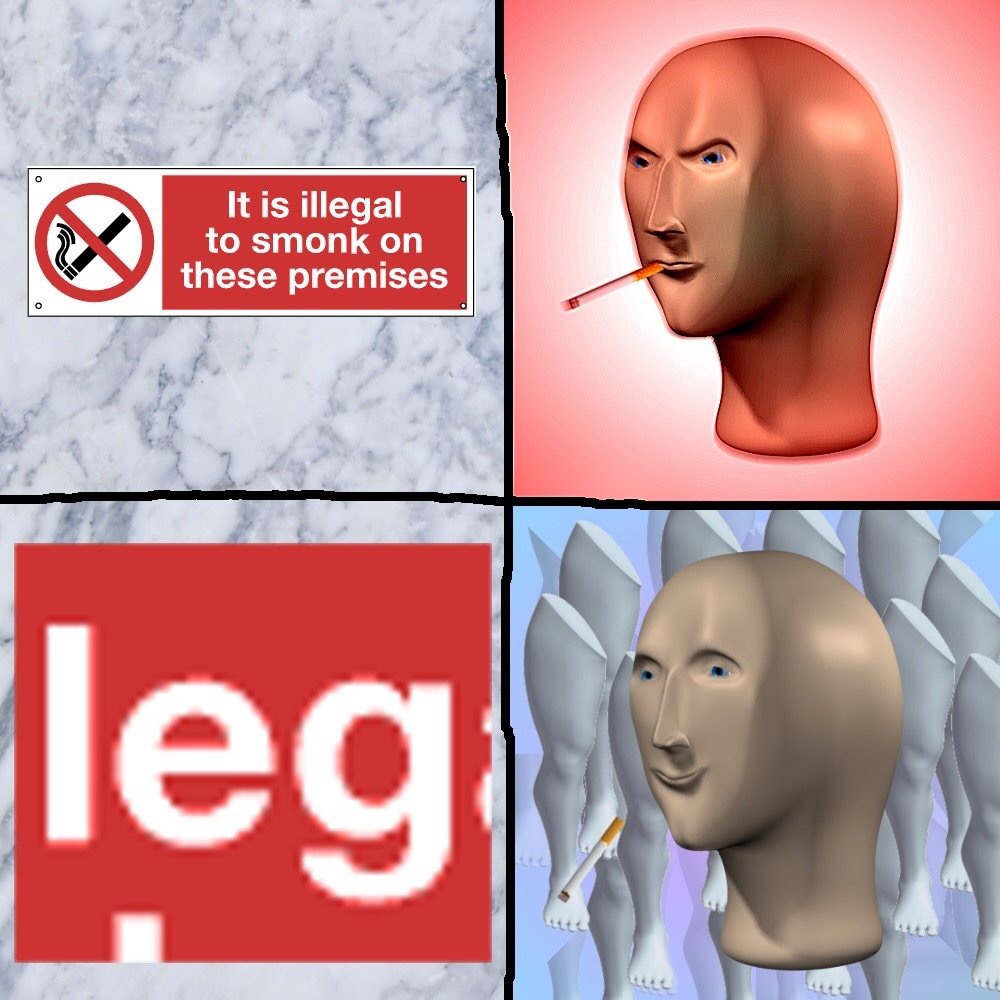
It’s hard not to think that so much in the modern day has already been too polluted by the defining aesthetic toxins of our time, not just to even be satirized, but all around in general. AI writing and imagery and Google search results, sensory assault graphics and audio via tiktoks and youtube videos, maximalist deranged ideology and misinformation and propaganda through terrible memes and in-person ads. Maybe that’s why more and more people (myself included) have been venturing and looking back to the comparatively slower 20th century more for discovery and answers. Not simply out of nostalgia, but because it’s easier to find and identify the social cycles, movements, and themes that have reappeared in our postmodern day without our current cloud of info-noise and spam attached. We’re all too familiar with how the last 10 years have looked through our current lens, so finding new, less reactionary perspectives of it (through history repeating itself, previous theory, etc) can be a way to find new answers that lie outside of the Great Content Deep Fry Loop. Almost like water, as the internet as an information source gets less reliable and more concentrated with toxic pollutants, some of us are looking to try and find the vanishing uncontaminated reservoirs. These sources are most obviously found in books and other media made before the gradual creep of this postmodern info contagion, but I think the way forward is to create them yourself as well. Beyond just reading and searching through old things, what I’ve been trying to do is maintain my levels of stimulation at a healthy equilibrium, as contradictory to the modern algorithm based lifestyle that may be. I get some shit from friends from time to time for not wanting to participate in things as often as they may want me to, but sometimes giving your nervous system a break is incredibly helpful, and maybe even a necessity now. Consciously and rebelliously slowing things down may be the true way to combat the unsustainable reactionary accelerations of our time. We could probably all afford to be a little more bored. Yes, as Ari Aster has pointed out, shit is very fried, and embarrassing, and schizophrenic, and contradictory, and overwhelming right now. But I don’t know if the answer to it is simply showing us that it is again, because we clearly know it is. I think now is the time to really do something about it beyond just presenting the issues over and over. If not on a larger scale, at least on a personal one, for our own sake.
⫘⫘⫘⫘⫘⫘⫘⫘⫘⫘⫘⫘⫘⫘⫘⫘⫘⫘⫘
Recent Pieces/Mockups
SUMMER SALE! Discounts continue on all custom orders, available at hello@marksabinodesign.com


⫘⫘⫘⫘⫘⫘⫘⫘⫘⫘⫘⫘⫘⫘⫘⫘⫘⫘⫘
“Depression’s Got a Hold of Me”
At the time of writing this, I’m in the throes of a bad depression. I mean, I have been for a long time, honestly for the larger part of my life thinking about it, but there are specific periods and flare ups that feel more particularly potent and jarring than the usual latent version that’s rested on my chest and shoulders for as long as I can remember. This is one of those instances. Frankly, it’s a large part of the reason why this edition of the newsletter has taken so long to put out. The terrifying sapping powers of the wrong mental state can carve and burn through days and weeks like they’re nothing, blurring together into vague grey space between sleeps. I’ve rarely talked about it in an acute way, for any number of reasons, but I figured trying to exorcise these feelings is better than my usual strategy of simply “waiting it out” and hoping that it goes away through some serendipitous event outside of my control. Recently, I’ve begun to try and treat depression like the illness that it is. Sometimes you get a bad cold, sometimes you come down with food poisoning, sometimes you’re overcome with depression. Like an illness, I’ve noticed people tend to treat you differently when you reveal what you have. You’re looked at as infected, or a victim, or in some cases, potentially contagious. All for something that’s happening (mostly) out of your control, or at least despite your best efforts. Alternatively, it’s just something you don’t feel like troubling other people with, not wanting to tarnish the overall vibe or worse, be marked with that ever-present stigma of a downer (a label I’ve gotten all the more used to as time has gone on). It’s very common to mistake or assume depression or existentialism for nihilism, but I’m not a nihilist. I do want better, and do believe it’s possible, somehow. The assumption is that these thoughts are an overt intentional choice, that there is some inherent antagonistic misanthropy that makes you feel the way you do, or that it’s some type of personal attack on a way of life, but it’s not. As a result, it’s usually something to be kept hidden, to clash against silently and in secret and (often self imposed) solitude, to expend all leftover energy against until you’re feeling “presentable” enough again.
I visualize a potent depressive episode as an old, worn out living room I return to periodically. It’s familiar, it’s dark, it’s desolate, and it’s isolating, with no door or way for others to penetrate its thick, insulated, soundproofed walls. It’s just me there. However, what worries me is unlike a cold or food poisoning, this illness seems to get more severe every time it reemerges and strikes again, taking a little more with it each time. The proverbial living room loses a lamp, or a shelf, or a picture frame with each new trip to it. Like a dream, you can’t remember how or exactly when you arrived there, you just know you’re there now. Also like a dream, you never truly know when you’ll leave this room. Often, it fades away into daylight without you noticing, after some new preoccupation or type of motivation comes along and provides an adequate enough distraction to take your mind off of where you found yourself. In my case, it’s been “cool stuff”, partnerships or commissions or other serendipitous or random feeling opportunities that have found their way into my email inbox that help change the occupation of my brain momentarily, ever so slightly. However, this (clearly) doesn’t actually solve the problem, as I know deep down, with enough time, I will be back in that dark, barren room again, embarrassed and bitter that I thought this time would be the one that fixes the issue. How stupid of me. When depression fully seeps in, it makes it exponentially harder to try and make myself care, to come up with or generate my own new reasons to push onward. Especially if it feels like I’m not getting any from the outside. A vicious, self-enforcing cycle. The itchy sensation that the world I grew into just might not have appeal for me, or might not be enough can bite viciously and incessantly at random like an enraged horsefly. Couple that with the feeling that I maybe can’t truly share or express these thoughts with friends, and it can lead to unconsciously convincing myself I’m trapped.
The coolness, the desire or drive I wrote about previously goes hand in hand with these feelings. On one side, they’re usually the things to help pull you out of the void, the sparks that reinvigorate you and propel you into the world with fire in your spirit again. On the other, when they’re more sparse or even absent, as they feel now, it only compounds the bleakness clouding your brain. The search for more stings harder with each failure to reach it, and you begin to feel selfish for even thinking that what’s in front of you is not enough, that maybe you must not deserve better, or to reach that happiness you want, otherwise it would’ve come already. Feeling like you’re waiting at a train station, glancing up at the smashed time table sign above you, desperate to see when the next one will arrive, but never being able, never being allowed, to know. The feeling of tears welling up inside without a catharsis like pressure in a balloon without relief. Things don’t feel worth it. It’s hard not to slip into such a low state when there isn’t much (at least at the immediate moment) to counteract that steep, exponential downward slide. Reminders of things that “aren’t so bad”, or “could be worse” do what lifting they can, but ultimately, new supports are needed, especially when we now have a 24 hour doom information machine on us at all times, eager to remind us how terrible and lame and vacuous and miserable the world around us can truly be. Negativity, especially a type as reinforced as our modern info-sickness based one, greedily takes whatever it can with reckless abandon, and stagnation or simply more of the same just doesn’t have the proper defenses to combat it. You have to construct them yourself with new input like a sort of immune system. Without those new additions, that ever-present constricting blanket of fatigue or even defeat is incredibly dense and difficult to punch your way out of. It’s not for a lack of effort either. It can feel like your fingers are bleeding from clawing upward and outward, legs straining and buckling with effort, eyes stinging from frantically darting around for a path of escape. The internal combustion engine of hope is an immensely powerful force, but when it takes damage or begins to sputter without proper fuel, even for a moment, you really feel it hard.
Maybe that’s just another testament to the importance of that motor, that essential machine in ourselves that keeps us upright and moving. When power is low, or something unidentifiable is misfiring, it threatens to shut down the entire operation, and rationality takes a backseat. It’s no wonder why in times like that, I reactively frantically curl inward, into the chassis, desperate to find and solve whatever is causing this malfunction, surrounding myself with barbed wire to ward off anyone that might distract from that. But as I’m learning, that’s clearly not the best way to do it. Sometimes the distraction is the way out. In the same way you seem to only find a lost item when you stop actively looking for it, sometimes the best way to return to lucidity is to simply not focus on the spiral itself, as insurmountable a task that may seem, through truly feeling the moment in time as it occurs. As an example of what I mean, there are certain “in-between” days or moments that you wind up remembering forever for seemingly no particular reason. Periods of ordinary stillness or motion that lie somewhere in the middle of the tentpole larger memories that we usually think of, somehow permanently affixing themselves into our brain encased in glass. In those specific “in-between” moments, the vibes so to speak were so strong, so distinct, that despite not being as notable as larger life events, they cement themselves in us unconsciously, ascribing themselves with unexpected value. Maybe slightly hazy but still distinct and vivid in remembered feeling. Morning coffee on a remarkably dark and misty autumn day in the cafeteria in high school, checking Complex for info about the latest Supreme drop, thinking about ScHoolboy Q’s upcoming album and the chapters of The Crucible you had to read for class, peering out the window into the dark atmosphere around the building, letting the mood of the season overtake you, recognizing in the moment that you are consciously living through some kind of equilibrium, almost arbitrary in its lasting power in your brain. However, these micro moments or tiny scenes that stick with you are just as important for your mental state, for making you feel truly present in not just your own life, but life itself. Depressive bouts and the modern lifestyle threaten to rob us of these crucial building blocks of our memory and personality. It feels like now, with our heads permanently bouncing from screen to screen, stimuli to stimuli, it’s easier to miss them, and in turn cheat ourselves out of the little extra reminders of the experience of living. When I say that sometimes distraction is the way out of these dark periods, I mean this type of constructive distraction. Letting your eyes and mind wander in the park, or out a window, or really taking in the feeling of the setting you’re in. A conscious presence that lets the mind both relax, and operate more smoothly. Oftentimes, entering this state, allowing yourself to pick up on the little details of life, lets you finally see a window outside of that dark living room you were too panicked to notice in the moment.
As is tradition now when I go through these particularly dark periods, I reread portions of my favorite essay, The Myth of Sisyphus, particularly the sections on the rejection of suicide and the values of staunch, clear, active rebellion. Facing the absurdities, the tumultuousness, the emptiness that may come with living, there are hundreds of ways to conquer or defy them, but only one way to truly be defeated by them. Succumbing to them simply can’t be an option. Now, will I tell you that there’s a simple answer? That it’s as easy as “getting back out there” or “being more positive” or “finding the beauty in every interaction” or whatever other self-help platitudes are being passed around online and in-person? Fuck no. Is there some value in them? Sure. But I can tell you from firsthand, lifelong experience that sometimes being told that and failing to do so just stings harder, that sometimes you’re just not trying to hear that, and that sometimes you simply can’t quiet the observations of how humiliating engaging in our modern world can be, or how much people can suck. Sometimes, it’s okay to face your melancholy. My approach, even as I find myself locked in a clash with my own depression, is to truly accept that a lot in the world right now (especially online) is supremely embarrassing, or evil, or otherwise just not desirable to participate in in one way or another, and then actively rebel against it in the ways I can. Seek out the things that are fun, or inspiring, or actually motivating to you by any means, and embrace them full on, in active spite of the world around you, because the only thing more embarrassing than life may seem right now, is being defeated by it. That can’t be the thing to win in the end. An active, rebellious, fiery push for more, for better for yourself, instead of some hollow passive one held together by Hallmark card “positivity” and faked good vibes. There is immense value in being confronted with the bleakness of the world and rejecting it, not through succumbing to it, but through a cathartic, sometimes even spiteful willing of agency over your own happiness, just to prove that it is still possible despite the forces at play seemingly trying to prevent it. A big, universal “Fuck you” to the inky anguish creeping up on you. I don’t have exact or acute go-to examples of what the immediate “solutions” for these depressive periods truly are, even for myself, especially as so much now begins to feel more and more homogenized or limited (trust me if I had the answers I’d be on them immediately and sharing the strategy). However, I do know that knowing you want more than what’s presented to you and starting towards something different is sometimes enough motivation to chase it down, to win the race against your own despair, to will into existence and reach that happiness you deserve, by any means. There is a lot of constructive value in simply increasing the amount of variety, the potential amount of spontaneous or serendipitous variables that can enter your life and change the momentum of it positively. I even hate to hear it myself sometimes, especially when I get in these dark periods, but willing yourself out of a slump is possible, it’s just not always easy. It might take a considerable amount of effort, but it’s effort that feels worth it in order to escape that spiral, to find or even create those distractions from the bleakness. Maybe Henry Rollins said it best, “They say, they say things are gonna get better/All I know is, THEY FUCKING BETTER!”
⫘⫘⫘⫘⫘⫘⫘⫘⫘⫘⫘⫘⫘⫘⫘⫘⫘⫘⫘
Keep reading with a 7-day free trial
Subscribe to A Guy Not A Newsletter to keep reading this post and get 7 days of free access to the full post archives.